

Your stack, discovered first.
The platform is the product. Connecting it to your CRM, back office, supplier systems and inventory sources is a service we scope with you, on your actual workflow, and deliver on the platform's webhooks and APIs. It is priced separately from your licence, starting with a discovery week, and nothing is announced as available until it has passed a test on your data.
Integrations are scoped, not included.
GDS Genie and DMC Genie cover what the suites do on their own. Connecting your CRM, back office, supplier systems or inventory sources is separate work on a separate bill, and it starts with a paid discovery week. We would rather say that here than halfway through an implementation.
We read your vendor's API, confirm what it actually exposes, and tell you what is possible, what is not, and where a workaround costs more than the thing is worth. The honest no is part of the deliverable.
A written number for the build, based on the events and fields we mapped together, not a range invented on a call.
What gets built first, what depends on what, and which parts you can defer to a second phase without blocking go-live.
You will have spent a week and a fixed fee, not a build budget. The write-up is yours either way, including the reasons it did not work.
One week to start. It extends only when the requirement genuinely needs it, agreed with you before the week runs out, and never as a surprise on an invoice.
- Separate from your licence. It is not part of the GDS Genie or DMC Genie subscription, and nothing about your monthly licence changes whether you run a discovery or not.
- Separate from implementation. Discovery buys the answer. The build is quoted at the end of it, and you decide then.
- What it depends on. The number of systems, what your vendor's API exposes, and how much of your field mapping already exists.
Indicative and subject to the order form. Implementation, migration and custom development are quoted separately after discovery.
Customize your solution. Keep the platform.
GDS Genie and DMC Genie are the solutions. Integrations and customization are an option on top: a separate engagement, quoted openly before it starts rather than appearing on a later invoice. The same team that builds the platform scopes and delivers them.
Which system, which events, which fields, who touches them. You leave with a document your IT can review, a build cost and a timeline. $999 for the week, separate from your licence.
Integrations use the same webhooks, inventory API and reference data every customer gets. They stay maintained as the platform moves.
We name the real systems. Where a connection is scoped on request rather than in production, we say so.
What we connect, by category.
Named systems come from real client work. No logos we do not have the right to show, no partnerships we do not have.
CRM
Deals created, quote status synced, emails logged against the right record.
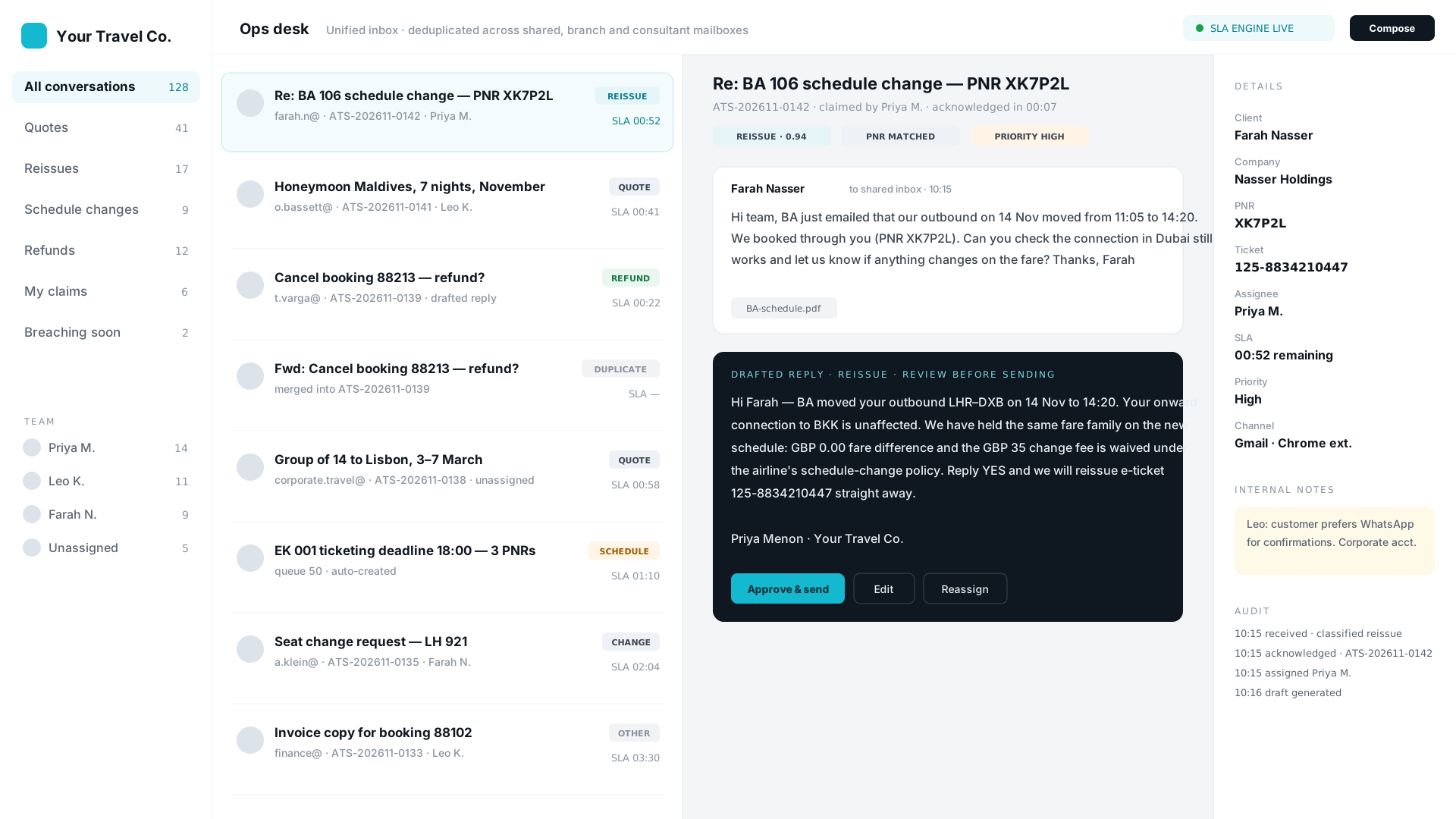
- Pipedrive · deals, quote status, email loggingin delivery
- HubSpot, Salesforce, Zoho, Freshsales · the CRMs our inquiries name mostscoped on request
Back office and finance
Bookings, invoices and commissions flow into the ledger you already run.
- Tramada-class systems · finance dashboard scope confirmed after integrationscoped on request
- Finance and reporting dashboard · revenue, margins, volumes by agent, hotel, destinationDMC module
GDS extensions
More connections, more PCCs, automation beyond the first GDS.
- Amadeus CAP-CAU · automated queue and ticketing workflowsavailable
- Travelport · flights, hotels, cars automationavailable
- Additional PCCs and GDS connections · cross-PCC pricing within one GDSscoped on request
Supplier systems and portals
Contract data and stop-sales pushed where your suppliers expect them.
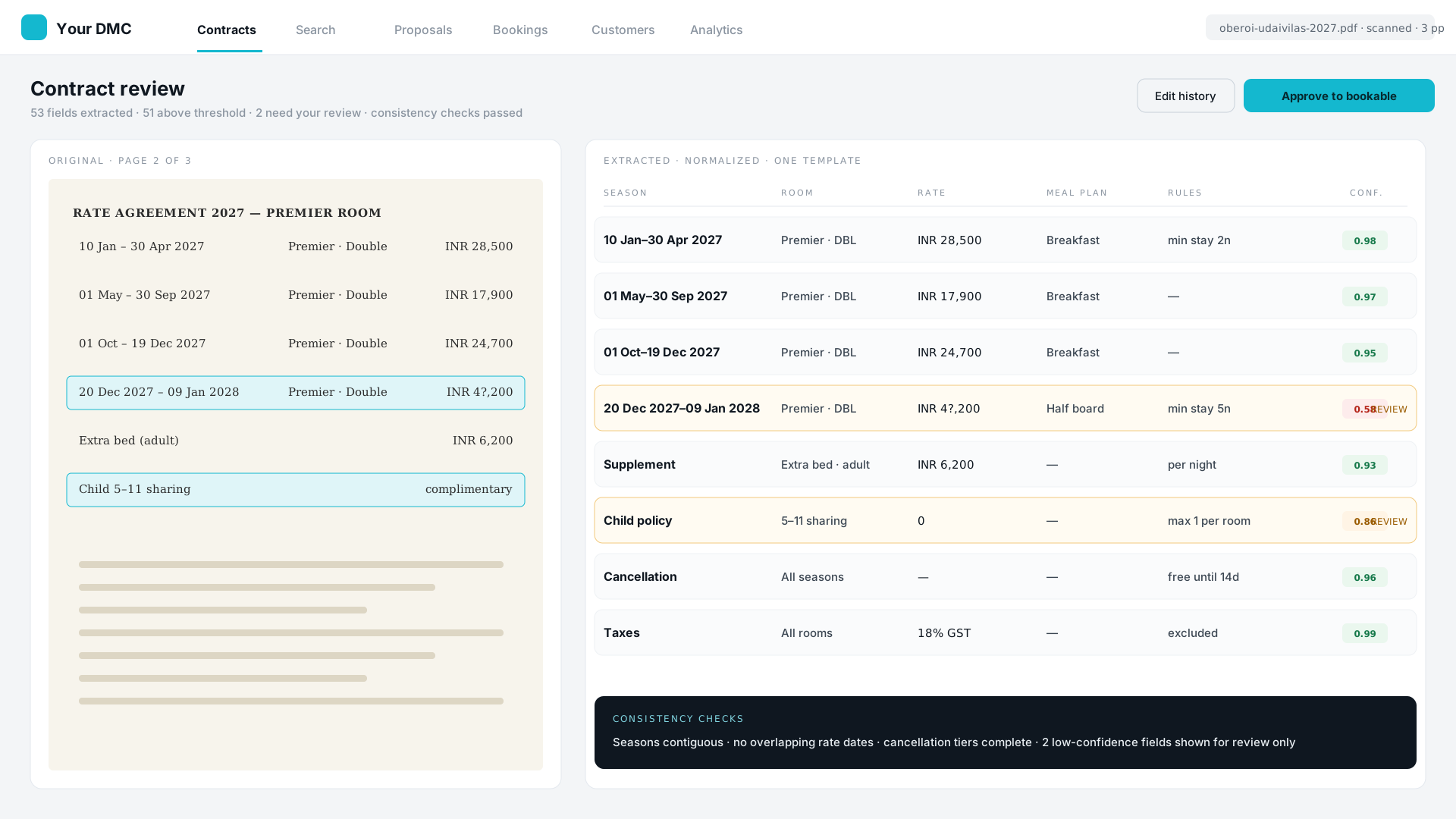
- Sejour (UAE) · parsed contracts and stop-sale updates, end to endin delivery
- Safari Portal · structured quote feed in their formatin delivery
Tour operator systems
Contract and booking data flowing both ways.
- Tour Plan · contracts and bookings between the two systemsscoped on request
Inventory sources
Compare your contracts against live and aggregated rates, side by side.
- Live Sabre hotel rates · selected properties, real-time availabilityavailable
- Bed-bank aggregators · Hotelbeds, WebBeds, TBO, Sunhotels named by inquirersscoped on request
Messaging
Your numbers, your senders, on every channel the platform supports.
- WhatsApp Business API · your own numberavailable
- Telegram bot · for markets where WhatsApp is restrictedavailable
- SendGrid, SMTP, Postmark, SMS gateways · bring your ownavailable
Email and ingestion
Near-real-time email into the Ops Desk from the mailboxes you already use.
- Gmail push (Cloud Pub/Sub) · P95 ingestion target 60 secondsavailable
- Chrome extension · push any email into the deskavailable
Migration and custom work
Getting your history in, and the edge cases only your business has.
- PNR import · Sabre, Amadeus, Travelport bookings made elsewhereavailable
- Data migration and custom development · scoped after discoveryscoped on request
How an integration gets ready
Six steps, each with a named owner on both sides. Nothing is announced as available until it has passed step five on your data.
Discover
A working session on your workflow: which system, which events, which fields, who touches them. We leave with a written scope, not a slide. This is the $999 week; everything after it is quoted at the end of it.
Evaluate the API
We read the vendor's documentation and confirm what it can and cannot do before anything is promised. Gaps are written down, with the workaround or the honest no.
Access
Sandbox credentials, scopes and data-protection sign-off arranged with your vendor and your IT. Least privilege by default, stored in the platform vault.
Build out
Mapped, built on the platform's webhooks and reference data, and reviewed with you at each milestone. No custom code in your systems.
Test on your data
Run against your real records in a sandbox. You sign off on the results, not on a demo. Failures are listed with cause and fix.
Deploy and monitor
Switched on in your environment with monitoring and a delivery log, then maintained with the platform. Retries and failure alerts are on from day one.